Zeroing and Long-Range Practice for Montana Hunting
Montana asks more of a rifle than most states do. A hunter in the timber west of Missoula may never shoot past 150 yards. The same hunter on a bench above the Missouri Breaks may be looking at 450 across a coulee with a crosswind, and both of them have the same rifle in the truck. Setting that rifle up honestly, and knowing where your own limit falls, is the most useful shooting work you can do before a season. General information; practice rules and access conditions change, so check current requirements before you shoot.
What the law allows
Start here, because it is simpler than people expect. FWP places no caliber limitation and no magazine or round capacity restriction on firearms used for game animals. Rifle scopes with illuminated reticles, built-in rangefinding capability and red dot sights are all lawful for taking game animals. A suppressor may be used while hunting if it is registered with ATF; hunting with an unregistered device to muffle a report is an offence under MCA 87-6-401.
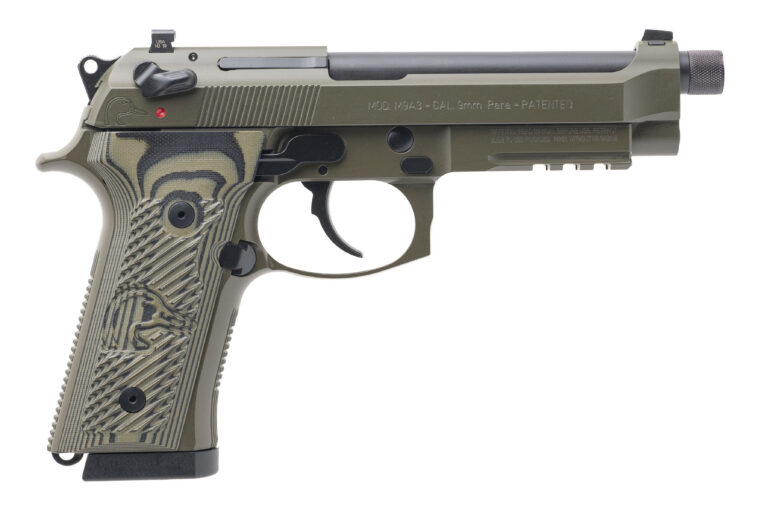
Two constraints do bite. Some hunting districts are weapons restriction areas where only archery equipment, crossbows, traditional handguns with a barrel under ten and a half inches chambered for straight wall cartridges, qualifying muzzleloaders or shotguns are allowed. And the muzzleloader heritage season, Dec. 12 to 20 in 2026, bars optical magnification entirely along with breech loading and pre-prepared cartridges. Check the district before you build a plan around a rifle. See our Montana firearm law overview for the wider rules.
Choosing a zero
A 200-yard zero is the sensible default for a Montana big game rifle. With most modern hunting cartridges it puts you an inch or two high at 100, close to point of aim at 200, and a manageable amount low at 300, which covers the great majority of shots you will actually take.
A 100-yard zero is easier to confirm and easier to dial from, and if you shoot with a turret rather than holdovers it is arguably the better choice. What matters is that you pick one, write it on a card taped to the stock, and never guess again.
Avoid the temptation of a very long zero. Zeroing at 300 to flatten the trajectory puts the bullet several inches high at 150, which is exactly the range where a lot of Montana elk get shot in timber.
Confirming it properly
A rifle sighted in from a bench in July is not the same rifle in November. Build the confirmation around the conditions you will hunt in.
- Shoot the ammunition you will carry. Different lots shift point of impact. Buy enough of one lot for practice and the season.
- Let the barrel cool. Three-shot groups with time between them tell you the truth. Ten rapid rounds tell you about barrel heat.
- Use field positions. Once the zero is confirmed from a bag, move to a tripod, a pack and sitting. Your group will open up. That number, not the bench number, is your ability.
- Check the tracking. Dial up twenty clicks, shoot, dial back, shoot. If the rifle does not return to zero, you cannot trust the turret and should shoot holdovers instead.
- Record conditions. Temperature, elevation and the chronographed velocity if you can get it. A ballistic solver is only as good as the velocity you feed it.
Altitude, temperature and cold
Montana hunters cross real environmental spread. A rifle zeroed at 3,200 feet in Billings in September may be used at 8,500 feet in the Beartooths in November at fifteen degrees. Thin air reduces drag and raises impact at distance; cold powder lowers velocity and drops it. The two partly cancel, and at 200 yards neither is worth worrying about. Past 400 they matter, and the fix is to run your solver with the real conditions rather than trusting a printed card made in summer.
Practical habit: shoot a cold-bore confirmation the week before the season, in the morning, in the clothing you will hunt in, from a tripod. If it lands where the card says, stop adjusting.
Wind is the real problem
Elevation is arithmetic; a solver handles it. Wind is judgement, and it is what causes almost every clean miss in eastern Montana. On an open bench a steady fifteen mile crosswind can push a common hunting bullet well over a foot at 400 yards, and the wind at the animal is often not the wind on your face.
Learn to read mirage through your spotter, watch grass and sage at several distances between you and the target, and treat a gusty day as a reason to close the distance rather than a reason to hold more. A heavier, higher-BC bullet buys you some margin, which is the real argument for cartridges like the 6.5 and 7mm class over older flat-shooting designs.
Setting an honest limit
Decide your maximum range on paper, at the range, before the season, and define it as the distance at which you can put five consecutive shots into a vital-sized circle from a field position in the wind you expect. For most hunters who practise regularly that is somewhere between 300 and 450 yards. For most who do not, it is closer to 250. Neither number is shameful. Shooting past it is.
Montana's terrain usually gives you the option of closing. A coulee, a fold, a fence line or a patient half hour of waiting will often halve the distance. Use the country instead of the turret when you can.
Where to practise
Public range options in Montana are thinner than the map suggests. FWP owns or leases a short list of ranges that admit the public for a day-use fee, and the range list on this site covers them. Beyond that, most developed ranges are club run. On national forest and BLM ground, dispersed target shooting is often allowed but is subject to safety rules, seasonal fire restrictions and local closures, so check with the managing office before you set up. Never shoot at a hillside you cannot see the top of, and pack out everything you brought in, including brass and targets.
For the hunts this preparation is aimed at, see our guides to antelope hunting and Block Management access, and remember that much of the high country is occupied grizzly range, covered in our grizzly country guide. Rifles, glass and ammunition are in the catalog; the shop page explains how a firearm order reaches your dealer.
This page is general information, not legal advice, and it is current as of September 2026. Range rules, hunting district boundaries and season dates change, so confirm them with Montana Fish, Wildlife and Parks before you shoot.
General information, not legal advice. Current as of September 2026. Laws change; check the official source before you act.